
Last Updated: November 1, 2026
Quick Summary
A model home is a decorated sales environment built to sell a floor plan, not a finished house, so separate the staging from the specification you would actually buy. Ask whether each feature you see is standard or an upgrade, and get the written standard specification before you tour. Measure rooms, document every visit, and treat visible defects as a sample of the builder's workmanship.
- Ask for the written standard specification before touring, since it is the baseline for any comparison.
- Staging often uses smaller furniture to make living space feel bigger, so measure the actual living space.
- Mark each feature on the model's list as standard or upgrade, then price the upgrades you want.
- Schedule an independent inspection during due diligence, before earnest money becomes non-refundable.
- Most new-home warranties include a one-year workmanship, two-year systems, and ten-year structural warranty.
Table of Contents
- Why a Model Home Is a Sales Tool, Not a Finished Home
- Start With a Model Home Checklist Before You Walk In
- Questions to Ask When Touring a Model Home
- Model Home Upgrades vs Standard Features: What You Actually Get
- Room-by-Room Inspection: Construction Quality and Hidden Defects
- Buying a Model Home Pros and Cons
- Independent Inspections, Warranties, and Model-Home Purchase Terms
- Explore Your Options With a Builder Comparison
- Frequently Asked Questions
Why a Model Home Is a Sales Tool, Not a Finished Home
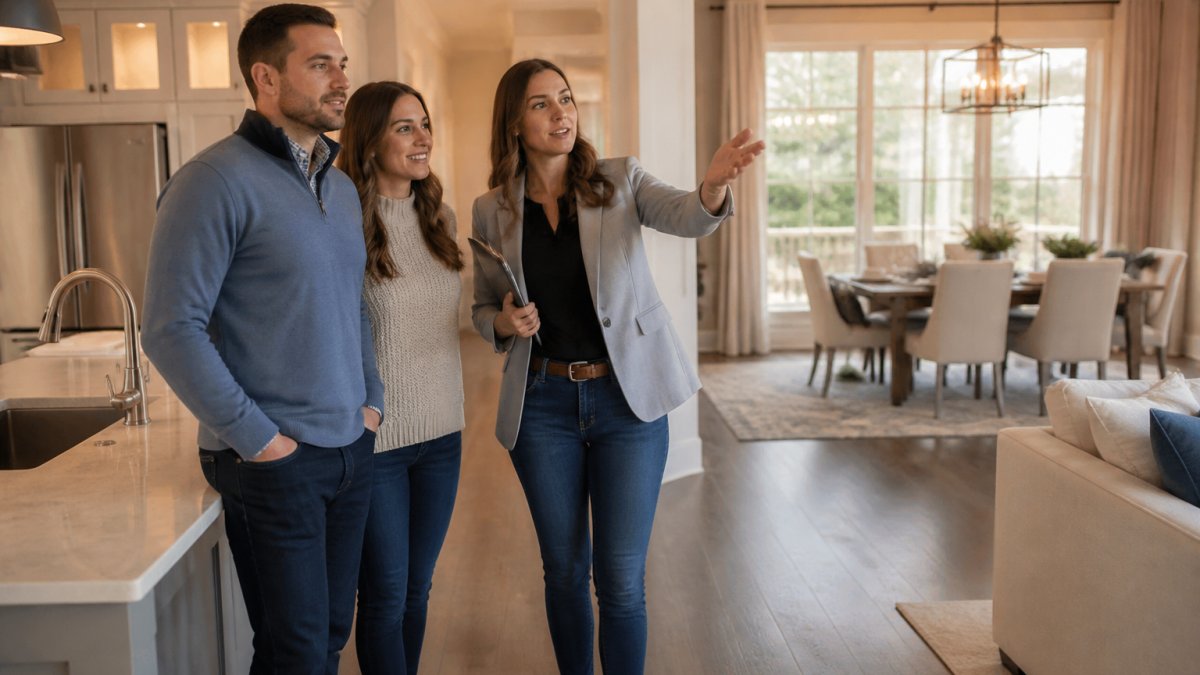
A model home is a decorated sales environment built to sell a floor plan, not a finished house.
Buyers who tour model homes often fall for the feeling of the space and skip the specification behind it.
That's not a knock on builders. A model house has one job, and it does that job well.
The model shows a floor plan at its absolute best; your home will be built to a written specification that may look nothing like it.
Start With a Model Home Checklist Before You Walk In
The best model home tours start before you leave the car. A model home checklist keeps you focused on facts instead of finishes, without one, most buyers admire decor and leave with no usable notes.
Bring these to every tour:
- A printed copy of the floor plan and price sheet
- A tape measure
- Your phone for photos
Ask for the written standard specification before you tour, since it is the baseline for any comparison.
What to Bring and How to Document Each Visit
Document every model the same way so you can compare them later.
- Photograph each room from the doorway, then close up on finishes
- Note room dimensions and measure anything that looks tight
- Write down the model name, lot, and base price on every page
One habit pays off: photograph the fine print. Builders often list standard features on a small placard or brochure, and that list is the real starting point for any comparison.
Questions to Ask When Touring a Model Home
The right questions turn a pretty walkthrough into a real evaluation. Ask them early, write down the answers, and treat vague answers as a signal.
Start with the big one: "Is everything I see standard, or is some of it an upgrade?" Then follow with the questions below.
Questions About the Floor Plan and Layout
Ask how the floor plan fits real life, not just the tour.
- Which rooms get morning and afternoon light?
- Where does the model's furniture differ from the plan's dimensions?
- How wide are the hallways and doorways?
Staging often uses smaller furniture to make living space feel bigger, so measure the actual living space and check your own furniture clearances.
Questions About the Builder and the Community
Builder reputation and neighborhood context deserve equal weight.
- How long has the home builder operated in this market?
- What's the builder's background on warranty claims?
- What are the HOA dues, and what do they cover?
Ask builders directly about their warranty track record.
Model Home Upgrades vs Standard Features: What You Actually Get
The gap between model home upgrades and standard features is where budgets go sideways. Model homes often show upgraded cabinets, countertops, flooring, and fixtures.
Take the model's feature list and mark each item as standard or upgrade, then price the upgrades you actually want.
Buyers who skip this step can discover the gap at contract signing. For a closer look at what a builder model includes by default, see what is standard in a builder model home.
| What You See in the Model | Usually Standard? | What to Ask |
|---|---|---|
| Decor and furnishings | No | Staging only, not included |
| Countertops and cabinets | Sometimes | Which tier is included? |
| Flooring | Sometimes | Which rooms, which material? |
| Fixtures and lighting | Often upgraded | Standard vs upgrade list |
| Landscaping | Varies | Included in price or not? |
Room-by-Room Inspection: Construction Quality and Hidden Defects
Walk the model like an inspector, not a guest. Construction quality shows up in the details: how trim meets the floor, how doors close, how caulk lines run.
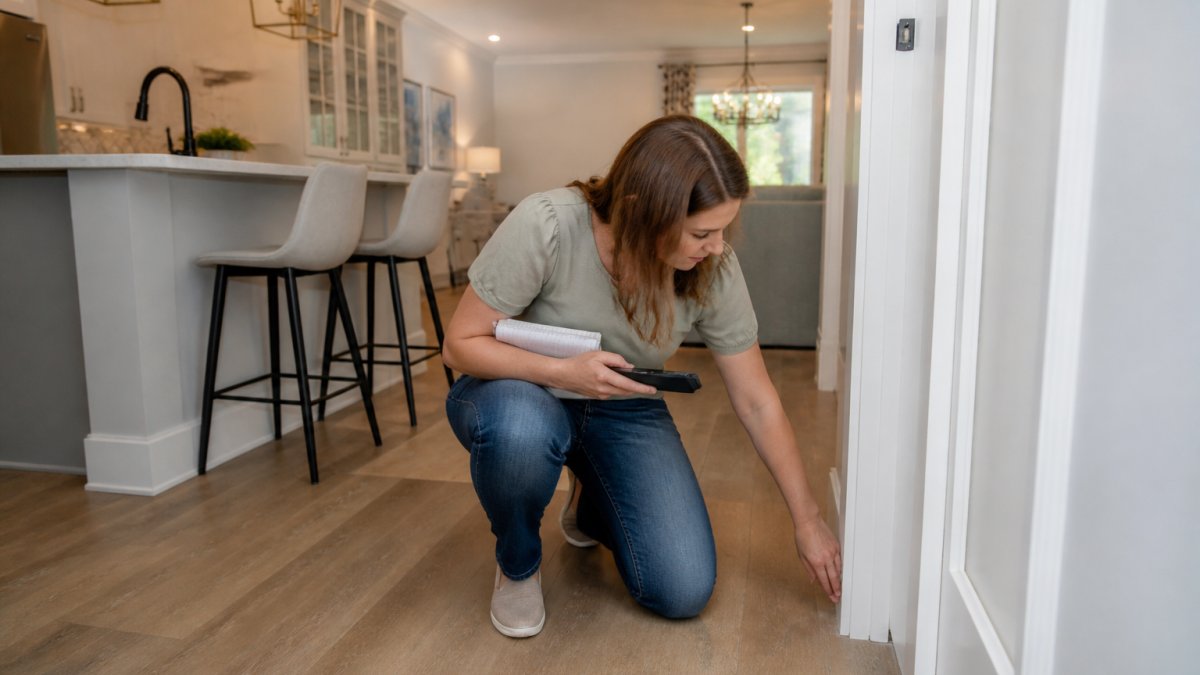
Inspect in the same order every time so you can compare models later, noting each item on a simple 1-5 scale.
Entry, Hallways, and Doors
- Open and close every interior door. Does it latch with a light push, or stick and require a shoulder?
- Look at the gap between the door slab and frame. An uneven gap on one side usually means the frame is out of square.
- Check the hinges: three on a standard door is normal; two on a heavy door is a shortcut.
Kitchen and Bathrooms
- Turn on every faucet and let it run for a minute. Check water pressure and look under the cabinet for leaks at the supply lines and drain.
- Fill each sink and tub partway, then drain it. A slow drain in a new model is a warning about the rough-in plumbing.
- Open and close every cabinet and drawer. Doors should align, and drawers should glide without wobble.
Bedrooms and Living Areas
- Test every electrical outlet with a small plug-in tester. It takes seconds and catches dead or miswired outlets the staging hides behind furniture.
- Look at the window trim and sill. Gaps, uneven reveals, or caulk smeared on the glass point to rushed installation.
- Open and close every window. They should slide or crank smoothly and lock without force.
Garage, Exterior, and Mechanicals
- Look at the garage floor for cracks and the walls for moisture staining. Check that the slab slopes toward the door, not back into the house.
- Walk the perimeter outside. Soil should slope away from the foundation, not toward it.
- Check the downspouts and confirm they discharge away from the foundation.
What the Staging Hides
Model homes are furnished to make rooms feel larger and brighter. Common tricks to check against the actual plan:
- Smaller-scale furniture in bedrooms and living rooms
- Mirrors placed opposite windows to double the light
- Rugs laid to hide flooring seams or patches
When a room feels generous, measure it and compare the number to the floor plan. If the plan says the bedroom is 12 by 13 feet, a queen bed and two nightstands should fit with walking room to spare, if they don't, the staging is doing the work.
A model home is a sales environment, so treat visible defects as a sample of workmanship rather than a complete punch list. The point of the walkthrough is to learn what the builder's finish standard looks like, and which questions to ask before you sign.
Buying a Model Home Pros and Cons
Buying the model itself is a different deal from buying a to-be-built home, and the trade-offs are real.
On the plus side, a model home is finished, so you see exactly what you get.
On the downside, the model has taken traffic. Expect wear on floors, doors, and fixtures.
If furniture is part of the deal, confirm what stays. See whether a model home purchase can include furniture before you assume the staging comes with the house.
Independent Inspections, Warranties, and Model-Home Purchase Terms
An independent inspection is your best protection on any model home, and the timing matters as much as the inspector. A model is still a house, and a third-party inspector will find things a sales walkthrough won't, but on a model home, the inspection window is often shorter and the leverage different than on a to-be-built home.
When to Schedule the Inspection
- On a model you are buying as-is: schedule the inspection during your due diligence period, before your earnest money becomes non-refundable. Most contracts give you a set number of days to inspect and respond; confirm that number in writing before you sign.
- On a to-be-built home: arrange a pre-drywall inspection once framing, plumbing, and electrical rough-in are complete but before drywall goes up. This is the single most valuable inspection in new construction because it is the last chance to see what is behind the walls.
- On a model you are using only as a reference: you generally cannot inspect a home you are not buying, but you can ask the sales agent for the builder's inspection reports, warranty documents, and any punch lists from prior models.
Ask the inspector to check what a sales tour cannot: attic insulation depth and coverage, HVAC duct sealing, foundation cracks, roof flashing, and the electrical panel. Confirm in writing whether the builder will allow access for an inspection before or after closing.
How Builder Warranties Actually Work
Builder warranties vary widely, so read the actual document rather than the brochure summary. Most new-home warranties follow a similar structure:
- A one-year workmanship warranty covering items like drywall cracks, trim gaps, and door adjustments
- A two-year systems warranty covering plumbing, electrical, and HVAC distribution
- A ten-year structural warranty covering major structural defects, often backed by a third-party warranty company
The details that matter are the exclusions, the claims process, and the response timeline. Ask these questions and get the answers in writing:
- What is excluded from the workmanship warranty?
- How do I file a claim, and what is the response window?
- Is the structural warranty backed by the builder or a third-party insurer?
Warranty claims usually go through a dedicated customer service portal or a single warranty contact. Find out who that is before closing, not after.
Model-Home-Specific Purchase Terms
Buying the model itself is a different transaction from buying a to-be-built home, and the contract should reflect that. These are the items buyers most often assume are included and later find are not.
- Furnishings and decor: Staging furniture, artwork, rugs, and accessories are usually not included unless the contract says so. If they are, get an itemized list with condition notes.
- Appliances: Confirm which appliances convey, refrigerator, washer, dryer, and any built-ins, and whether they are the model's display units or new replacements.
- Occupancy and closing timing: The builder may need to keep the model open for tours after closing, or lease it back. Clarify who pays utilities, insurance, and taxes during any post-closing occupancy.
New Home Hub SWFL reimburses third-party home inspections at closing up to $500, and our team helps review written specifications against marketing claims. For a stage-by-stage plan, use this new construction inspection checklist.
Explore Your Options With a Builder Comparison
Comparing builders side by side is the step most buyers skip, and it's the one that changes the outcome. A model home only tells you about one builder's version of a floor plan.
Our team runs independent comparisons of local builders, costs, and floor plans, and helps you weigh the full financial picture beyond the advertised price. You can compare builders before choosing a community and keep your options open.
Frequently Asked Questions
What should I look for when touring a model home?
Focus on what is actually included versus what was added for display. Ask for the written standard features list, measure room dimensions against the floor plan, and photograph finishes, fixtures, and trim. Check workmanship in corners, closets, and the garage where staging hides flaws. Note the model's lot orientation and window placement, since those affect light and energy use in your actual home.
How can I tell which features in a model home are upgrades?
Request the specification sheet and compare it line by line with the model's finishes. Anything not on the standard list typically carries an added cost. Ask your builder's sales representative to price each upgrade separately so you can see the real total rather than the advertised base price.
Is buying a model home a good idea?
It can be, depending on your priorities. The trade-offs: the home has seen heavy foot traffic, furniture anchors and staging may have left marks, and the builder's warranty clock may already be running. Hire an independent inspector before closing and confirm in writing which warranties transfer and for how long.
Can you negotiate the price of a model home?
Negotiation is sometimes possible. Ask about the asking price breakdown, whether upgrades are included, and what closing cost credits are available. Get every concession in the purchase agreement, not a verbal promise.
The challenge isn't finding a model home you love. It's knowing whether the home you'd actually get matches the one you toured. New Home Hub SWFL helps you close that gap with independent builder comparisons, written-specification reviews, and inspection reimbursement at closing. Get started with New Home Hub SWFL and tour your next model home with a checklist that protects your purchase.
